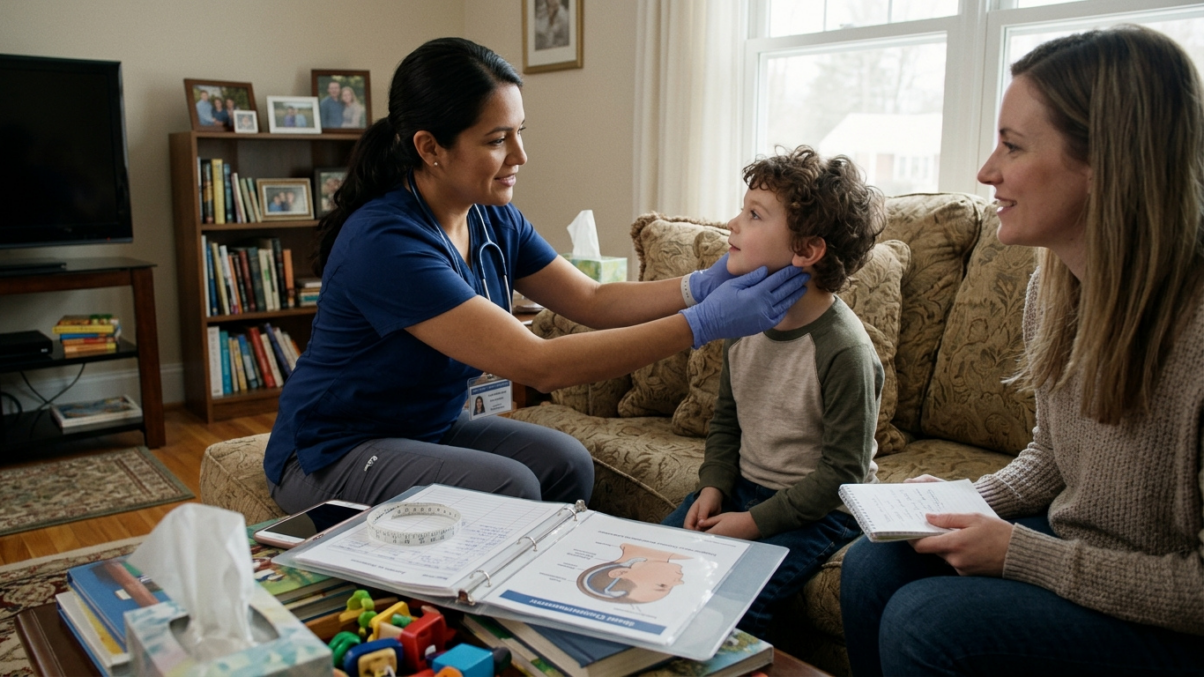
Going home from the hospital should feel like relief. But for many families, it also brings worry. Reducing hospital readmissions is one of the biggest goals in healthcare today. Home health care plays a major role in making that goal possible.
For families of medically fragile children, this concern is even greater. Premature infants, children with tracheostomies, and kids who depend on feeding tubes all need extra support. Thankfully, skilled home health services can bridge that gap between hospital and home.
In this article, we’ll explain why readmissions happen, how home health prevents them, and how Sunbridge partners with your care team every step of the way. We’ll also look at real data behind these outcomes. By the end, you’ll understand exactly how skilled care at home changes recovery.
Whether you’re a hospital case manager, a nurse, or a parent, this guide is for you. Reducing hospital readmissions takes teamwork between every part of the care journey. Home health is often the missing piece that makes discharge plans actually work. Let’s break down how that happens, step by step.
Why Readmissions Happen After Discharge
Hospital discharge can feel rushed, even when it isn’t. Patients and families often leave with new instructions to follow. As a result, small details can get missed during this transition. This gap is one of the leading causes of readmission.
According to research on avoidable hospital readmissions, the annual cost of preventable readmissions reaches billions of dollars every year. Additionally, many of these return visits could have been avoided with proper follow-up care. That means better support at home truly matters.
For medically fragile children, the stakes are even higher. A missed feeding schedule or a loose trach tie can escalate fast. Therefore, families need more than a discharge folder full of paperwork. They need real, hands-on guidance once they arrive home.
Furthermore, complex medical needs rarely stay the same day to day. A child on a ventilator may need adjustments as they grow. Similarly, adults using TPN lines need ongoing monitoring for infection. Without consistent support, small issues can turn into emergencies.
Medication mix-ups are another common cause of readmission. Patients often leave with several new prescriptions to manage at once. Meanwhile, dosages or timing can easily get confused without guidance. A nurse who reviews medications at home helps prevent these costly errors.
Missed follow-up appointments also play a big role in readmissions. Families are busy, and transportation isn’t always easy to arrange. As a result, important checkups sometimes get skipped entirely. Home health visits help fill that gap by bringing care directly to the patient.
According to national home health statistics, the average cost of a readmission runs well above the cost of the original hospital stay. This makes prevention not just a health priority but a financial one too. Consequently, hospitals and families both benefit when readmissions are avoided. Every prevented return trip saves stress, time, and money.
The Role of Skilled Nursing at Home
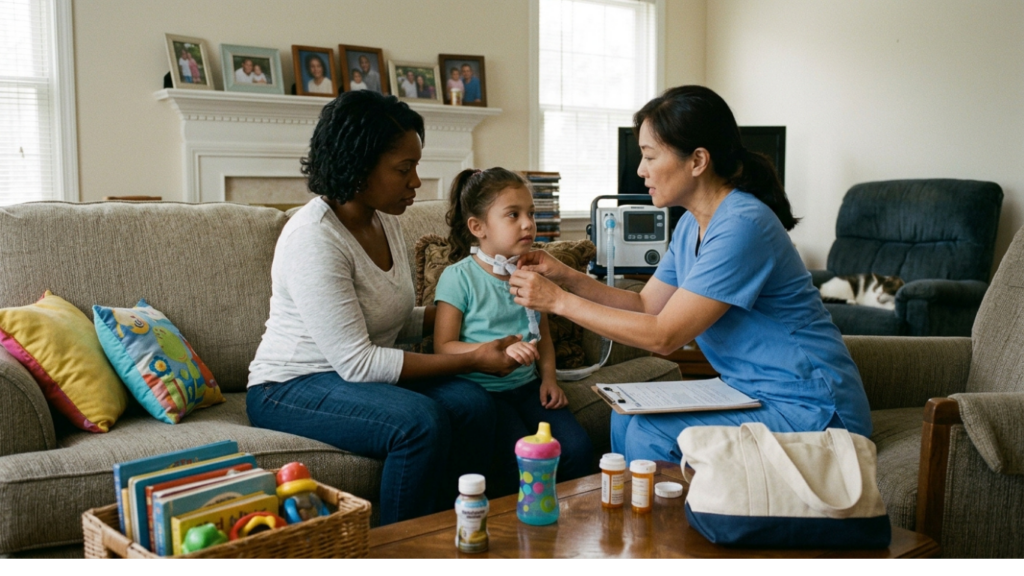
Skilled nursing brings hospital-level expertise directly into the home. This allows patients to heal in a familiar, comfortable setting. Meanwhile, nurses can catch problems early, before they become serious. That early action is often what keeps a patient out of the hospital.
Skilled home nurses are trained to manage a wide range of complex conditions. Sunbridge nurses regularly support patients such as:
- Premature infants with respiratory or feeding needs
- Children with tracheostomies or ventilator dependence
- Patients with G-tube, J-tube, or complex feeding regimens
- Adults supported under the Technology Assisted (TA) Waiver Program
- Patients requiring TPN line management
- Individuals managing shunts or epilepsy
- Patients experiencing seizures
- Individuals needing help with activities of daily living (ADLs)
Because of this wide range of needs, no two care plans look the same. Each nurse builds a plan around the patient’s exact condition. Consequently, families feel more confident managing care at home. This confidence directly supports reducing hospital readmissions long term.
In fact, studies on homecare nursing for children with medical complexity show fewer unplanned hospital visits among patients who receive this support. This is especially true for children who depend on medical equipment daily. Skilled nursing does not just treat symptoms; it prevents crises before they start.
Skilled nursing is different from general caregiving support. A skilled nurse can manage medications, wound care, and medical equipment directly. Additionally, they can assess changes in condition using clinical judgment. This level of training is essential for medically fragile patients.
Sunbridge nurses receive specialized training beyond standard nursing education. Many focus specifically on pediatric respiratory care or ventilator management. Others specialize in seizure response or complex feeding regimens. This focused expertise gives families extra peace of mind at home.
Consistency also matters greatly in skilled nursing care. Patients often do best when they see familiar, trusted faces regularly. Therefore, Sunbridge works to match patients with consistent care teams whenever possible. This continuity builds trust and improves communication over time.
Monitoring Warning Signs Before They Escalate
One of the most valuable parts of home health care is early detection. Nurses are trained to notice subtle changes most families might miss. For example, a slight color change or unusual breathing pattern can signal trouble. Catching these signs early often prevents a trip to the ER.
Monitoring becomes even more critical for technology-dependent children. A ventilator alarm, a clogged feeding tube, or a shunt malfunction needs fast action. Similarly, adults on the TA Waiver Program often rely on daily check-ins for safety. Without this oversight, warning signs can go unnoticed until it’s too late.
According to HealthLeaders Media, home health visits can lower the chance of hospital readmission by as much as 25 percent. This happens largely because of consistent monitoring after discharge. As a result, patients get help before a small issue becomes an emergency.
Home health nurses also teach families what to watch for between visits. This includes tracking vital signs, feeding tolerance, or seizure frequency. Because families feel prepared, they’re less likely to panic during minor issues. Instead, they know exactly when and who to call.
Technology also supports this monitoring process today. Pulse oximeters, apnea monitors, and feeding pumps give nurses real data. Meanwhile, this information helps track trends instead of just single moments. As a result, care teams can respond before a pattern becomes a crisis.
Documentation plays a quiet but powerful role as well. Every visit note helps build a clearer picture of a patient’s progress. Consequently, physicians can make better decisions during check-ins or emergencies. Good documentation is one more way home health supports reducing hospital readmissions.
Regular monitoring also reduces the emotional burden on families. Parents of medically fragile children often carry constant worry. However, knowing a nurse checks in regularly brings real relief. This support allows families to focus on bonding, not just survival.
Communication Between Hospitals and Home Nurses
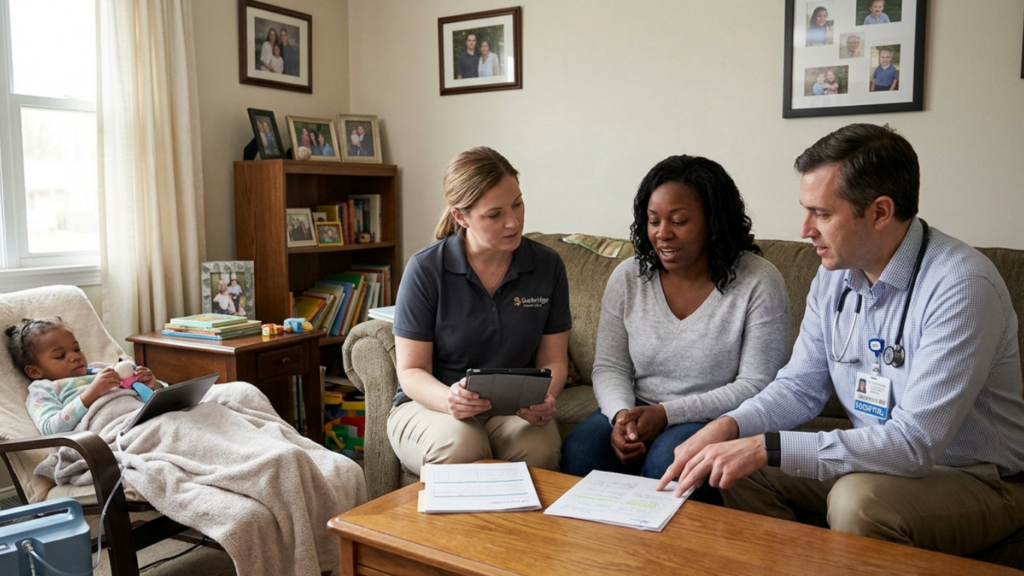
Strong communication is the glue that holds recovery together. When hospitals and home health nurses share information clearly, care stays consistent. Otherwise, gaps in communication can lead to confusion or missed treatments. This is especially risky for medically fragile children with detailed care plans.
Sunbridge nurses coordinate closely with hospital discharge teams before a patient ever leaves. This ensures medication schedules, feeding plans, and equipment needs transfer accurately. Moreover, ongoing updates continue between home nurses and physicians during recovery. This teamwork keeps every provider on the same page.
Research on children with medical complexity shows that coordinated care between hospitals and home teams improves outcomes significantly. In particular, it helps avoid delays in care for technology-dependent kids. Clear communication ultimately supports the larger goal of reducing hospital readmissions.
Families also benefit from this connected approach. They no longer feel stuck relaying information between providers. Instead, updates flow directly between the hospital, the home nurse, and specialists. This reduces stress and keeps recovery on track.
Discharge planning is where this communication truly begins. Before a patient leaves the hospital, Sunbridge reviews the full medical history. This includes equipment needs, medication lists, and therapy schedules. Starting early helps prevent gaps once the patient arrives home.
Communication doesn’t stop after the first few days, either. Home health nurses send regular updates back to hospital care teams. Meanwhile, any concerns are flagged quickly to primary care physicians. This ongoing loop keeps everyone aligned throughout the recovery process.
For medically fragile children especially, specialists often need to stay involved. Pulmonologists, neurologists, and gastroenterologists may all play a role. Because Sunbridge maintains open lines with these specialists, care stays coordinated. This teamwork approach is central to reducing hospital readmissions successfully.
How Sunbridge Partners with Your Care Team
Sunbridge was built to support the most complex cases with confidence and compassion. Our nurses specialize in medically fragile children and technology-dependent adults. From NICU graduates to TA Waiver participants, we tailor care to each person. This personalized approach is central to everything we do.
Every Sunbridge care plan starts with collaboration. We work directly with hospital discharge planners, physicians, and specialists. As national data on technology-dependent children shows, over a million children in the U.S. rely on medical equipment to survive. Families supporting these children deserve a care team that understands the complexity involved.
Because every patient’s needs are different, our nurses stay flexible and responsive. Whether it’s managing a trach, a G-tube, or seizure activity, we adapt quickly. Additionally, we remain in constant contact with your care team throughout treatment. This ongoing partnership is what makes reducing hospital readmissions achievable.
Sunbridge also understands the paperwork and programs families rely on. Our team helps navigate services like the TA Waiver Program with ease. Meanwhile, we handle scheduling, documentation, and communication so families don’t have to. This support lifts a heavy burden off already-stretched caregivers.
To sum up, here’s what a Sunbridge partnership offers your patients and their families:
- Skilled nurses experienced in pediatric and complex adult care
- Fast, coordinated communication with hospitals and specialists
- Consistent monitoring that catches problems early
- Support navigating waiver programs and insurance requirements
- A steady, familiar care team patients can trust
Every one of these pieces works together toward one goal. That goal is keeping patients safe, healthy, and out of the hospital. Reducing hospital readmissions isn’t just a statistic to us; it’s personal. It means more time at home, and less time worrying.
If your family or patient needs trusted, skilled home health support, we’re ready to help. Reaching out is simple, and our team responds quickly to new referrals. Below, you can start that process in just a few clicks.
Refer a patient here: https://sunbridgehhc.org/patient-referrals/