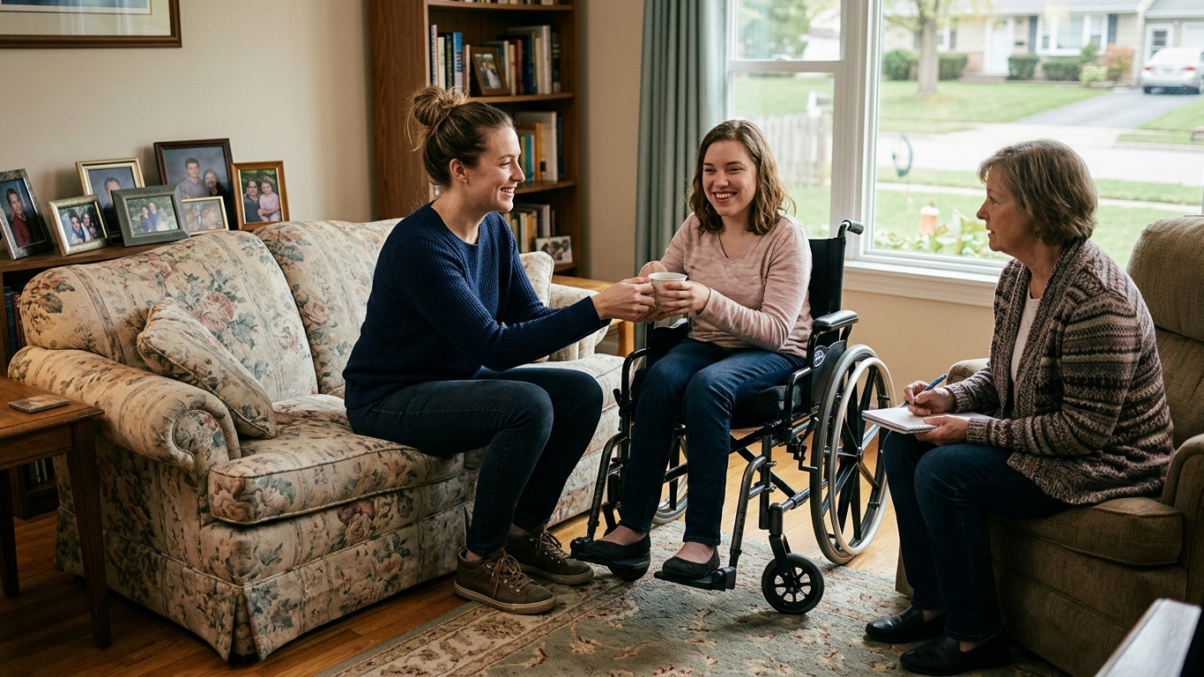
Adults with cerebral palsy often need more than basic caregiving. They need support that respects their independence and daily routines. Sunbridge Home Health Care provides in-home DSP support built around real trust. This kind of care feels less clinical and more like family.
Every person’s needs look different, especially with mobility or scoliosis. That is why Sunbridge trains direct support professionals, or DSPs, carefully. These DSPs learn to assist with transfers, positioning, and daily tasks. As a result, clients feel safer and more comfortable at home.
In fact, recent research shows cerebral palsy affects hundreds of thousands of adults nationwide. Because of this shift, in-home support has become even more essential. Sunbridge is proud to serve adults with cerebral palsy across our region. Our goal is simple: dignity, safety, and genuine companionship every day.
Today, more adults with cerebral palsy are living longer, fuller lives. This means long-term, in-home support matters more than ever before. Families increasingly search for care that adapts as needs change. Sunbridge is built to grow alongside each client’s journey.
Why In-Home Care Matters Now More Than Ever
The demand for in-home care continues rising across the country. Federal data from 2025 shows most states now run waiver programs for people with disabilities. Many of these programs specifically target intellectual and developmental needs. This growth reflects how essential home-based support has become.
The workforce behind this care has also grown substantially. Recent labor data shows employment in this field reached 2.4 million workers by 2024. That number keeps climbing as more families choose home-based support. More trained workers means more families can access reliable help.
Cost is another reason families choose in-home care today. Industry data from 2025 shows the median hourly cost of home care was around $33. Even so, many families find home care more affordable than facility care. Sunbridge works with families to explore coverage and payment options.
Beyond cost, comfort plays a major role in this growing trend. Staying home lets adults with cerebral palsy keep familiar routines. Familiar surroundings often reduce stress and support emotional wellbeing. This is one more reason in-home DSP support continues to grow.
What Daily Support Looks Like
Daily support means different things depending on each person’s routine. Some clients need help getting dressed, bathing, or preparing meals. Others need reminders for medication or help with light housekeeping. DSPs adjust their approach based on what each client truly needs.
Consistency matters greatly for adults with cerebral palsy at home. The same DSP visiting regularly builds trust and familiar routines. Research on personal assistance links steady support to greater independence for adults with CP. This consistency also helps caregivers notice small changes in health.
Transportation support is another common need for many clients. DSPs can accompany clients to therapy sessions or medical appointments. They also help with grocery shopping and other nearby errands. Overall, daily support keeps clients active, safe, and connected.
Meal planning is often part of the daily support routine too. DSPs can help prepare balanced meals that meet dietary needs. Some clients also need help with feeding or swallowing safety. These small details make a real difference in daily health.
Helping with Mobility and Scoliosis Care
Mobility challenges are common among adults with cerebral palsy. Studies show mobility can decline further as people get older. DSPs are trained to assist safely with transfers and positioning. This training helps prevent falls and reduces unnecessary strain.
Scoliosis is another concern that often develops alongside cerebral palsy. Research suggests scoliosis affects a large share of this population. Proper positioning and seating can ease pressure on the spine. DSPs help clients stay comfortable through supportive daily routines.
Here is how Sunbridge DSPs support mobility and scoliosis care:
- Safe transfers between bed, chair, and wheelchair
- Proper positioning to reduce spinal pressure
- Assistance with braces, supports, or mobility equipment
- Monitoring for skin changes or discomfort
- Coordination with therapists and medical providers
These steps help protect long-term comfort and physical health. Pain is also common alongside mobility and scoliosis challenges. Clinical studies report that many adults with CP experience chronic pain. DSPs watch closely for signs of discomfort during daily care.
Building Real Relationships
Care goes beyond physical tasks for adults with cerebral palsy. Real relationships form when DSPs show patience and genuine care. Clients often look forward to visits from their trusted DSP. This bond makes daily life feel warmer and less isolating.
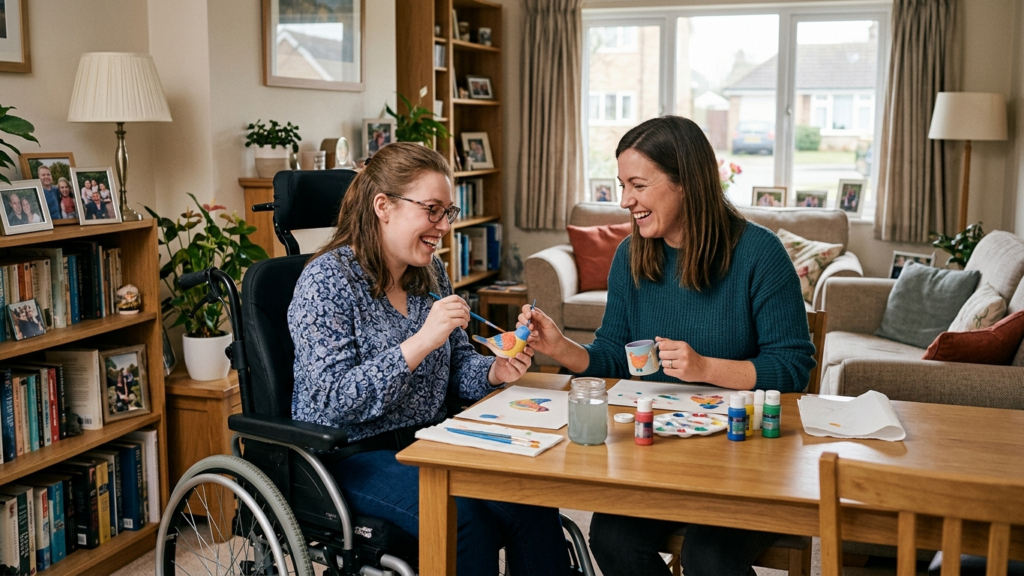
Sunbridge matches clients with DSPs who share similar interests. Shared hobbies make support feel more natural and enjoyable. Whether it is music, games, or conversation, connection matters greatly. These small moments build lasting friendships over time.
Families also feel reassured knowing their loved one is cared for. Open communication between DSPs and families builds further trust. Regular updates help everyone stay informed about daily progress. Ultimately, this teamwork strengthens the entire care experience.
Social connection also supports mental health in meaningful ways. Isolation can be a real risk for adults with limited mobility. A caring DSP helps reduce that risk through regular visits. This support benefits both emotional and physical wellbeing over time.
Why Families Trust Sunbridge
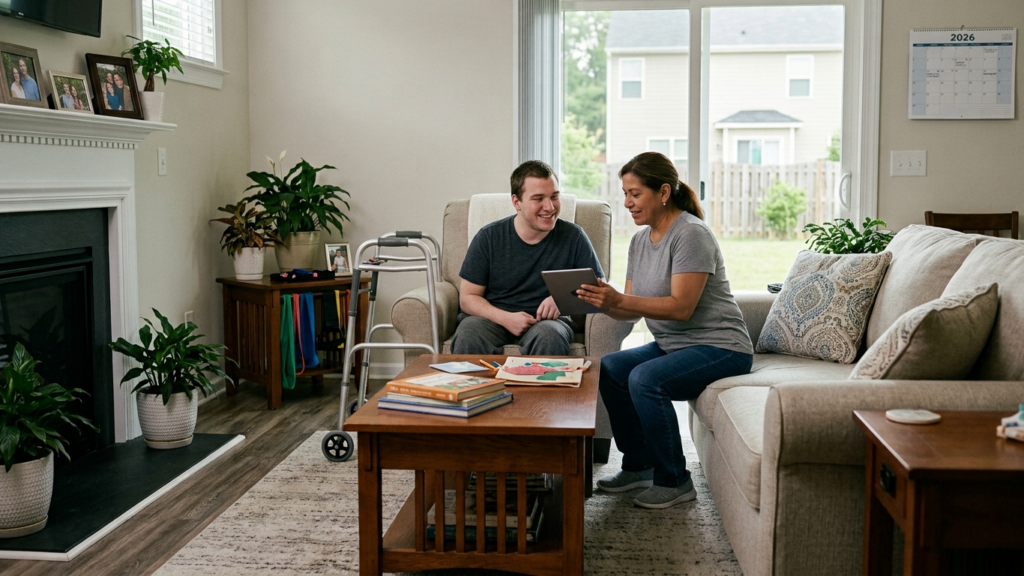
Families choose Sunbridge because of our consistent, compassionate care. We carefully screen and train every DSP before placement. Background checks and ongoing training help ensure client safety. Families can feel confident in who enters their home.
Communication remains a top priority throughout the caregiving journey. Our team stays available to answer questions or concerns. This transparency helps families feel supported, not just served. As a result, trust grows naturally over time.
Many families stay with Sunbridge for years, not months. That loyalty reflects the quality of care we provide. Adults with cerebral palsy deserve consistent, dependable support systems. Sunbridge works hard to be that dependable partner every day.
Our team also stays current on best practices in caregiving. Ongoing training helps DSPs adapt to changing client needs. This commitment to growth is part of why families stay. Quality care requires constant learning, not a one-time effort.
How to Get Started
Starting in-home care with Sunbridge is simple and straightforward. Families can visit our resources page to learn more first. Our team is ready to answer any initial questions. We guide every family through each step of the process.
Eligibility depends on individual needs and available services nearby. Our staff will review your situation and explain next steps. This includes discussing scheduling, services, and DSP matching. We aim to make the process feel simple, not stressful.
Many families also have questions about coverage and cost. Our team can help explain available programs and payment options. We want every family to feel informed, not overwhelmed. Clear answers make the entire process feel more manageable.
Adults with cerebral palsy and their families deserve real support. Sunbridge is ready to help you take the first step. Reach out today to begin building a care plan together. You do not have to navigate this journey alone.
Ready to Get Started?
Apply Here: https://form.jotform.com/252005159606149