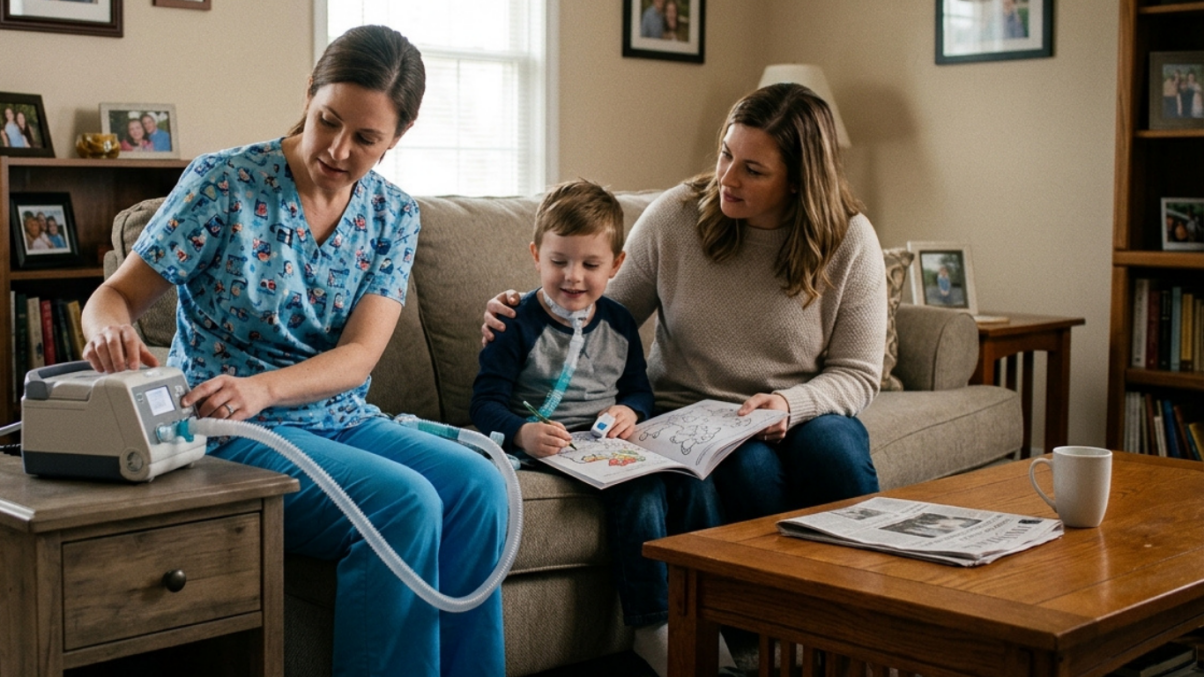
Home ventilator care can feel scary for parents at first. Many families bring a child home with a ventilator. This guide breaks down the basics simply. You will learn what to watch for every day.
A ventilator helps a child breathe when their lungs need support. It pushes air in and out through a tube. Learning how it works builds a parent’s confidence fast. As a result, safety habits protect your child at home.
This article covers daily checks, common alarms, and backup plans. We also explain infection prevention and support for parents. Finally, we share how skilled pediatric nurses can help your family. By the end, you will feel far more prepared.
Children on ventilators often have unique medical needs. Some were born premature, others have chronic conditions. Still, the core safety habits stay the same. Let’s start with how these machines actually work for kids.
How Home Ventilators Work for Children
A home ventilator is a small breathing machine. It sends air through a tube into the lungs. For children, this tube usually connects to a tracheostomy. The machine controls how much air flows in.
Additionally, ventilators use settings chosen by your child’s doctor. These settings include breathing rate and air pressure. Each setting matches your child’s specific lung needs. Therefore, never change these settings without medical advice.
Most machines run on electricity and battery power. Backup batteries keep the device running during outages. Filters and tubing also need regular cleaning. Overall, understanding these basics makes daily care much easier.
Pediatric ventilators are often smaller and more portable. This design helps children move around more freely. Some kids even take their ventilator to school. Portability supports a more normal childhood routine.
Getting comfortable with the equipment takes time for parents. Ask your care team to explain every button. Practice using the machine before leaving the hospital. Confidence grows with repetition and hands-on practice.
Daily Safety Checks to Perform
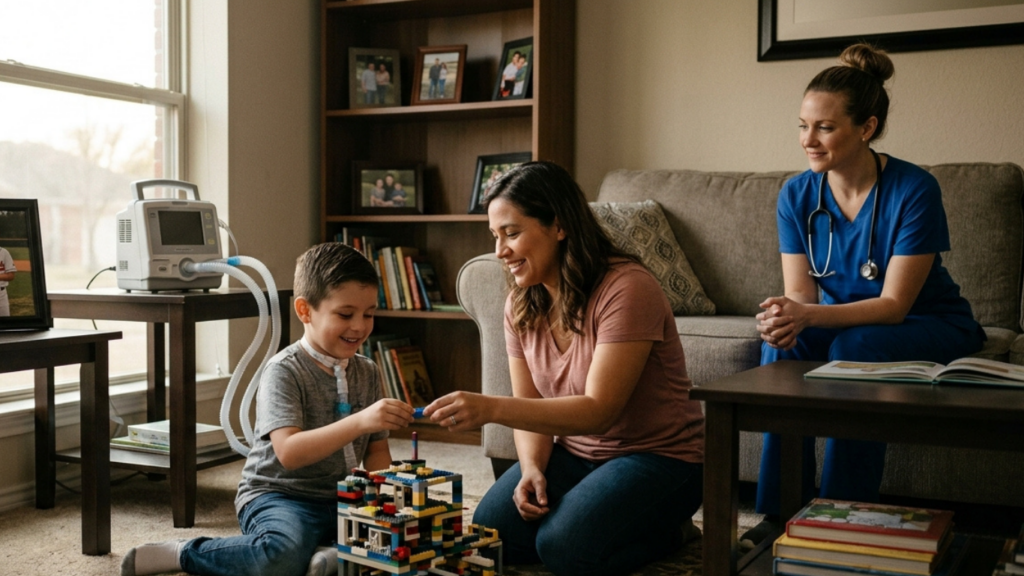
Daily checks keep home ventilator care safe for children. First, inspect the tubing for cracks or kinks. Next, check that all connections are tight. This only takes a few minutes each day.
A short daily checklist can help parents stay consistent:
- Check tubing for cracks, kinks, or leaks
- Confirm all connections are secure
- Clean or replace filters as instructed
- Test the backup battery power
- Record settings and readings in a logbook
- Inspect your child’s skin around the tracheostomy site
- Make sure the humidifier has enough water
- Check that tubing is not pulling on your child’s neck
Cleaning matters just as much as inspecting parts. Wash your hands before touching the equipment. Change filters based on the manufacturer’s schedule. Otherwise, dirty filters can cause breathing problems for your child.
Keep a simple logbook near your child’s ventilator. Write down settings, alarms, and any changes daily. This record helps nurses and doctors track your child’s progress. Consistent habits reduce risks and build a steady routine.
Set a specific time each day for checks. Morning routines often work best around school schedules. Consistency helps you notice small changes quickly. Small changes can signal bigger problems early on.
Do not skip checks even on busy days. A missed check can hide a real risk. Instead, build the habit into your family’s schedule. Over time, it becomes second nature for parents.
Common Alarms and What They Mean
Ventilator alarms sound for many different reasons. Understanding them helps parents respond quickly and calmly. Two common types are low and high pressure alarms. Each one signals a different kind of problem.
A low pressure alarm often means a disconnected tube. According to tracheostomy care specialists, leaks or loose tubing cause this too. Check all connections first when this alarm sounds. Then, reconnect anything that has come loose.
A high pressure alarm usually means blocked airflow. This can happen from kinked tubing or secretions. Suctioning your child’s airway sometimes clears the blockage, as explained by respiratory care experts. If alarms continue, contact your care team immediately.
Battery and power alarms are also common at home. These alerts mean the power source is weak. Plug the ventilator in right away if possible. Otherwise, switch to a fully charged backup battery.
Never ignore an alarm, even briefly. Instead, stay calm and check your child first. Look for signs of distress or discoloration. Afterward, troubleshoot the machine using your training.
Write down every alarm in your logbook. Note the time, type, and what fixed it. This pattern tracking helps doctors spot bigger issues. It also helps new caregivers, like babysitters, learn faster.
Preventing Infections During Home Ventilator Care
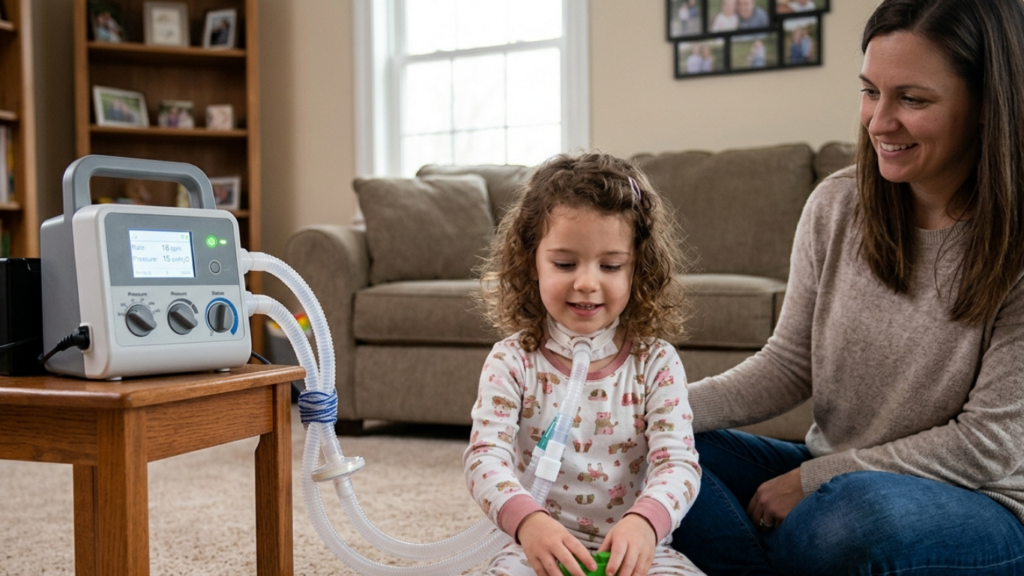
Infection prevention is a key part of pediatric ventilator care. Children on ventilators face a higher risk of pneumonia. Simple daily habits can lower this risk significantly. Small actions make a big difference over time.
Hand hygiene comes first, before and after every task. Wash your hands with soap and water often. Use hand sanitizer when soap is not available. This single habit prevents many infections for your child.
Oral care also plays a major role in prevention. Clean your child’s mouth and teeth several times daily. According to pediatric health researchers, this step removes germs before they reach the lungs. Suction secretions gently whenever they build up.
Positioning matters more than many parents realize. Keep your child’s head slightly raised during rest. This angle helps stop fluids from entering the lungs. Ask your nurse to show you the correct angle.
Watch for early signs of infection every day. Fever, thick mucus, or new coughing are warning signs. Report these changes to your child’s care team quickly. Early action often prevents a hospital stay.
Backup Plans for Power Outages
Power outages pose a real risk for children on ventilators. Losing power suddenly can be life threatening. That’s why every family needs a backup plan. In fact, preparation greatly reduces stress during emergencies.
According to the CDC, backup batteries and generators are essential during outages. Keep a manual resuscitation bag near your child’s ventilator at all times. The American Lung Association also recommends charging backup batteries regularly. Furthermore, test your equipment before an emergency happens.
Create a written emergency plan with your care team. Include contact numbers for doctors and equipment suppliers. Also, know where the nearest children’s hospital is located. A little planning brings real peace of mind.
Practice the plan with everyone in the household. Make sure babysitters, grandparents, and teachers understand it too. Post the plan somewhere easy to find. This way, no one panics during a real outage.
Register your address with your local power company. Many companies offer priority restoration for medical needs. Also, tell your local fire department about your child’s equipment. These extra steps add another layer of safety.
Pack an emergency bag well before it’s needed. Include chargers, batteries, and your child’s medical documents. Keep this bag in an easy-to-reach spot. Preparation today prevents panic tomorrow.
Helping Your Child Thrive at Home
A ventilator does not have to limit a child’s life. Many kids attend school, play, and grow normally. With the right support, daily life can feel routine. Focus on your child’s development, not just their equipment.
Talk to your child in age-appropriate ways about their care. Understanding builds comfort and reduces fear over time. Older children can even help with simple checks. This involvement builds independence and confidence.
Coordinate closely with your child’s school if applicable. Share care plans with teachers and school nurses. Make sure staff know how to respond to alarms. Clear communication keeps your child safer outside the home.
Celebrate small milestones along the way. Every stable day is a real accomplishment. Progress may look different for every child. Patience and encouragement support your child’s growth.
Supporting Parents Through the Journey
Caring for a child on a ventilator is a big responsibility. It affects the whole family, not just one parent. Parents often feel tired or overwhelmed at times. Recognizing these feelings is the first step forward.
Ask for help whenever you need it. Family, friends, and pediatric home health nurses can share the load. Support groups also connect you with other parents. Talking to others who understand truly helps.
Rest is not a luxury for parents. It is a necessary part of good care. Schedule short breaks throughout each day. A rested parent provides safer, more attentive care.
Remember that learning takes time for every family. Mistakes happen, and that is completely normal. Stay patient with yourself as you learn. Confidence grows steadily with practice and support.
How Our Nurses Manage Pediatric Ventilator Care
Our skilled nurses specialize in home ventilator care for children. They handle daily checks, alarms, and emergencies with confidence. Families trust our team for compassionate, reliable support. You can learn more on our resources page.
Each nurse receives specialized training on pediatric ventilator equipment. They monitor settings closely and catch problems early. This hands-on approach keeps children safer at home. Meanwhile, our team communicates constantly with pediatric physicians.
Beyond medical care, our nurses support the whole family. They answer questions and ease daily worries for parents. As a result, home ventilator care becomes far more manageable. You are never alone in this journey.
Our team also helps families build daily routines around school and play. We teach safety checks, alarm response, and infection prevention. Additionally, we help create personalized emergency plans. Every child receives care suited to their unique needs.
Ready to Get Started?
Caring for a child on a ventilator is easier with the right support. Our pediatric team is here to guide your family every step of the way.