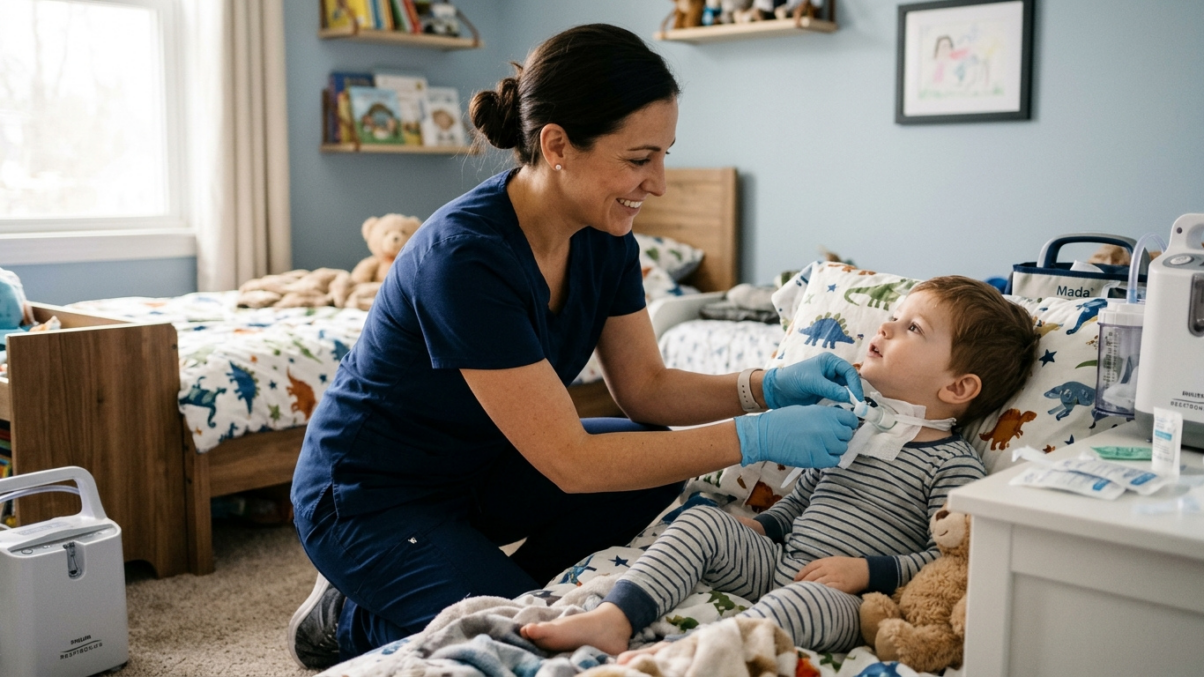
Tracheostomy surgery recovery is a big step for medically fragile children. It affects breathing, feeding, sleep, and daily life. Families often feel nervous, and that is normal. Clear steps can make the journey feel lighter.
A tracheostomy is a surgically made opening in the front of the neck. This opening goes straight into the windpipe. A small tube keeps it open so air can flow.
Some children need it for a short time. Others need it for much longer. Still, with training and support, children can be cared for safely at home. This guide explains what to expect during tracheostomy surgery recovery.
Why Some Medically Fragile Children Need a Tracheostomy
Children need a tracheostomy for many reasons. Some have a narrow airway. Others need long-term help from a ventilator.
The surgery happens in an operating room or intensive care unit. Children get general anesthesia, so they sleep and feel no pain. At some hospitals, the surgery takes about one hour. Still, tracheostomy surgery recovery takes time and patience.
A tracheostomy does not always last forever. Many children no longer need the tube later on. After it comes out, the opening often closes on its own.
The First Days in the Hospital
After surgery, the care team watches your child very closely. Many children first go to a pediatric intensive care unit. Oxygen may help them breathe during the first few days.
Your child may not be able to speak or cry at first. This can feel scary for parents. However, nurses can show you other ways to comfort your child.
Doctors check the dressing and the neck site each day. They look for bleeding, swelling, or signs of infection. Daily checks keep tracheostomy surgery recovery on track.
Hospital teams also teach caregivers new skills. Some hospitals train two caregivers before discharge. First, you watch the nurses. Then you practice with them beside you.
Learning Trach Care Before Going Home
Training is the heart of tracheostomy surgery recovery. You will learn how to suction the tube and clean the skin. You will also learn how to change the tube.
Practice makes these tasks feel easier. Ask the nurses to watch you and give tips. Speak up if any step feels unclear.
Learn the emergency steps too. These include what to do if the tube blocks or comes out. Practice them until they feel natural.
Before discharge, ask for a written home care manual. Also ask your provider about home nursing support. A good plan lowers stress for the whole family.
Daily Care at Home That Supports Tracheostomy Surgery Recovery
Once home, daily routines become the foundation of tracheostomy surgery recovery. Always wash your hands before and after touching the tube. Follow your care team’s schedule for every task.
At home, caregivers can use clean technique instead of sterile technique. Homes usually have fewer germs than hospitals. Still, clean supplies and clean hands matter every time.
Medically fragile children often have other health needs too. Therefore, trach care must fit into the full care plan. Your nurse can help you build a daily routine.
Keeping the Skin and Tube Clean
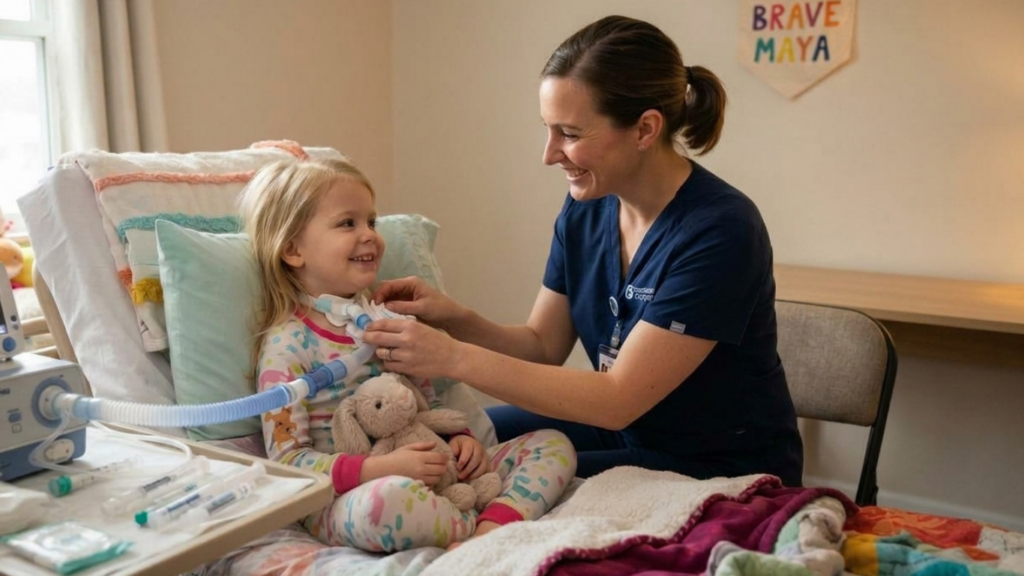
The skin around the stoma needs gentle care every day. Clean the opening as your care team showed you. Keep the area dry and check it often.
Watch for redness, swelling, or fluid at the site. These can be signs of infection. If you see them, call your child’s doctor.
Trach ties hold the tube in place. Change them on the schedule your team gives you. Check that they fit the way your team showed you.
Air, Humidity, and Safe Surroundings
A tracheostomy bypasses the nose, which normally warms and moistens air. Because of this, dry air can bother the airway. Many care teams suggest a heated humidifier or a heat-moisture exchanger.
Keep sprays, powders, perfumes, pet hair, and sand away from the tube. These can block the opening or irritate the airway. Research also shows a higher risk of infection and foreign objects after tracheostomy.
A trained caregiver should always stay with your child. This includes naps and nighttime sleep. Constant supervision is a key part of tracheostomy surgery recovery.
Warning Signs and Emergency Steps
Quick action can save a child’s life. Therefore, learn the warning signs before you leave the hospital. Check for these problems every day:
- Noisy, heavy, or fast breathing
- Skin around the trach pulling in with each breath
- Pale skin or bluish lips
- Blood around the tube or in the mucus
- A blocked or loose tube
Blue or gray lips need emergency help right away. Trouble breathing is also an emergency. If the tube comes out, use the steps your team taught you.
When you call 911, say that your child has a tracheostomy. Many families also keep an emergency health care plan. This plan lists your child’s needs and agreed treatments.
Bathing, Clothing, and Play
Bath time needs extra care. Keep water out of the tube at all times. Ask your care team how to wash your child’s hair safely.
Clothing matters too. Avoid anything that could block the tube, like a turtleneck. Choose soft, loose tops with open necks.
Play is important for healing and joy. Ask your doctor when your child can return to school or daycare. Then plan safe, calm activities with a trained adult nearby.
Feeding, Voice, and Comfort During Tracheostomy Surgery Recovery
Many children can eat normally after a tracheostomy. Some, however, need a feeding tube for a while. Your team will tell you what is safe.
Speech and voice may change after surgery. Some children can make sounds with the tube in place. Others need time and therapy first.
A speech therapist can help with speaking and swallowing. Ask your care team for a referral early. Early support can help your child grow new skills.
Comfort matters just as much as medical care. Keep routines calm and predictable. Also give your child plenty of liquids, as your team directs.
Why Pediatric Private Duty Nursing Matters
Medically fragile children often need skilled care around the clock. This can be hard for parents to give alone. Finding home nursing for a child with a trach can also be difficult.
A private duty nurse brings skilled care into your home. The nurse can suction, change tubes, and spot early trouble. As a result, parents can rest and focus on being parents.
Nurses also build trust with the child and family over time. Long-term bonds make care calmer and more personal. That steady presence supports tracheostomy surgery recovery in many small ways.
How Sunbridge Home Health Care Supports Families
Sunbridge Home Health Care specializes in pediatric private duty nursing for medically fragile children. It has served families across Alabama for the past eight years. Its team includes experienced RNs and LPNs.
Nurses are trained for trach care, G-tube care, and ventilator support. They also help with seizures and daily living needs. Therapy partners support the clinical team as well.
Sunbridge offers 24/7 availability with dependable nurse scheduling. It also supports families through the Technology Assisted Waiver program. Moreover, its referral process is simple for hospitals and physicians.
Care coordinators guide discharge planning and the start of care. Offices in Decatur, Dothan, and Fairhope serve the whole state. More than 150 clinical field staff provide statewide coverage.

Conclusion: A Safer Path Through Tracheostomy Surgery Recovery
Tracheostomy surgery recovery asks a lot from families and care teams. Still, training, daily routines, and quick action make a real difference. With support, medically fragile children can heal at home.
You do not have to carry this alone. Skilled nurses can ease the load and protect your child’s breathing. Are you a nurse who wants to make a difference? Sunbridge is looking for caring private duty nurses.
Together, nurses and families make tracheostomy surgery recovery safer. Apply today with the button below. We would love to welcome you to the team.
Apply Here: https://form.jotform.com/252036991437159
Refer a Patient Here: https://sunbridgehhc.org/patient-referrals/