What Are Developmental Disabilities Services in Alabama?
Every family wants their loved ones to feel safe, happy, and independent. For many families, that goal needs extra help at home. Developmental disabilities services in Alabama give thathelp to people who need it. These services support daily life, personal growth, and community connection.
Developmental disabilities are conditions that affect how a person learns, moves, or behaves. According to the CDC, about 1 in 6 children aged 3 to 17 has one. These conditions usually begin early and often last a lifetime. As a result, many adults still need steady support every day.
In our state, most of this support comes through Medicaid Waiver programs. The Alabama Department of Mental Health runs these programs for Alabama Medicaid. In addition, approved providers like Sunbridge deliver the care inside the home. This means your loved one can get help without leaving familiar surroundings.
Of course, these services do more than cover basic needs. They also help people build skills, make friends, and enjoy their community. For families, they bring peace of mind and some much-needed rest. In short, good support helps the whole household thrive.
Who Can Benefit From In-Home Support?
Developmental disabilities services in Alabama are made for people with lifelong support needs. At Sunbridge, we serve adolescents and adults with intellectual or developmental disabilities. Our main focus, however, is care for adults with intellectual disabilities. Each person we serve has unique strengths, goals, and challenges.
For example, we support adults with cerebral palsy, autism, and Down syndrome. That said, the people we serve are not limited to these groups. Some clients need a little help with daily tasks. Others need more hands-on care throughout the day.
To qualify for a waiver, a person must meet certain state rules. For the ID Waiver, a person’s intellectual challenges must begin before age 18. The person must also meet Medicaid financial rules. Because these rules can be detailed, the state reviews each case one by one.
If you are unsure whether your loved one qualifies, do not worry. The state call center can answer your questions and explain the next steps. Likewise, a support coordinator can help you understand your options. You do not have to figure it all out alone.
Understanding the Medicaid Waivers Behind In-Home Care
Most developmental disabilities services in Alabama are paid for through Medicaid Waivers. These programs pay for care at home or in the community. They give people an optionbesides living in a care facility. Sunbridge works with three main waivers, and each one serves different needs.
First, the Intellectual Disabilities (ID) Waiver serves adults and children age 3 and older. Next, the Living at Home (LAH) Waiver supports people who do not live in a group home. Under both waivers, Sunbridge offers personal care, companion care, and in-home respite. It also provides personal care transportation for trips outside the home.
Meanwhile, the Community Waiver Program aims to help people before a crisis happens. It focuses on keeping families together and building community life. Through CWP, Sunbridgeoffers Personal Assistance at home and in the community. It also offers Breaks and Opportunities, which can give family caregivers a needed rest.
Keep in mind that each waiver has a limited number of openings. If a waiver is full, eligible people are placed on a waiting list. Also, services are only approved when there is an assessed need. For this reason, it helps to apply as early as you can.
Daily Support Services Your Loved One Can Receive
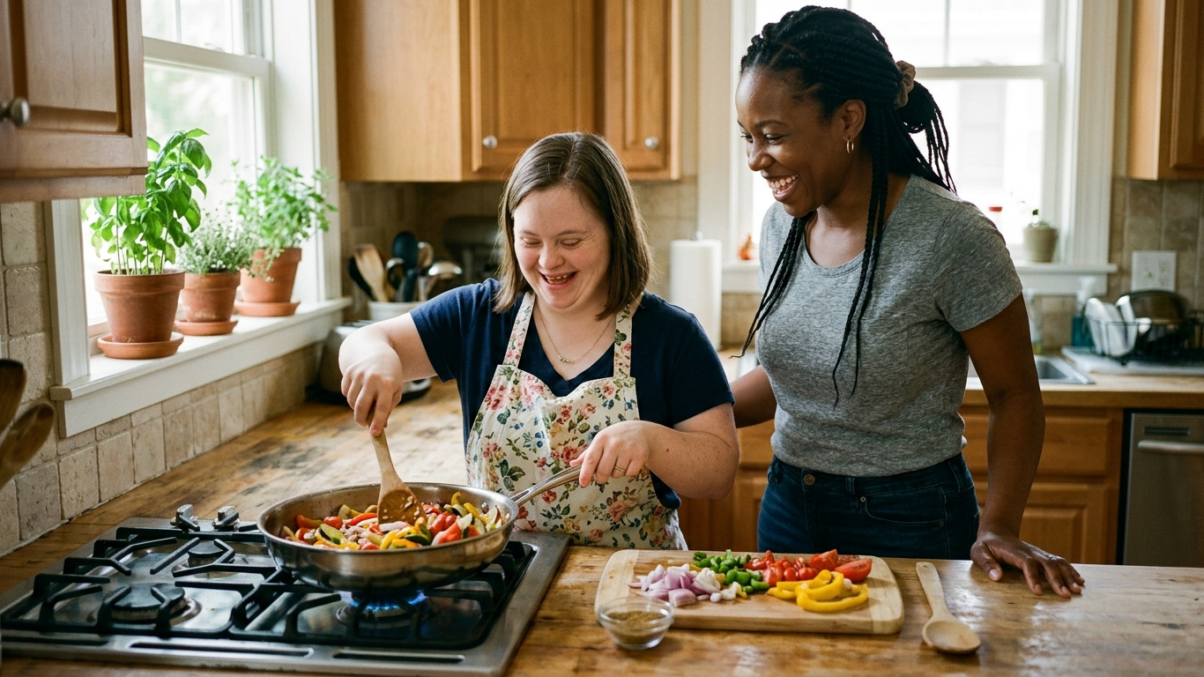
Direct Support Professionals, or DSPs, are the heart of in-home care. They deliver developmental disabilities services in Alabama right inside the home. Their goal is not to do everything for the person. Instead, they help the person grow more independent over time.
Because every person is different, each care plan looks a little different. Still, most plans include help with basic daily activities. Services can include:
- Meal and snack preparation
- Light housekeeping
- Laundry
- Bathing
- Dressing
- Grooming
- Leisure activities
- Community integration, like shopping trips and local outings
These small tasks can make a big difference. For example, a grocery trip builds skills and confidence at the same time. Likewise, cooking together can teach safety and healthy habits. Over time, these wins add up to real independence.
DSPs also offer friendship and a steady, caring presence. Many clients look forward to seeing their DSP each week. In fact, strong bonds often form between DSPs, clients, and families. This trust makes daily care feel natural and comfortable.

The Benefits of Receiving Care at Home
Home is where most people feel calm and secure. For someone with a developmental disability, this comfort matters even more. Familiar rooms, routines, and faces can lower stress and confusion. As a result, many clients feel more relaxed and open to learning.
Care at home also keeps families close together. Parents and siblings can stay involved in daily life and big decisions. Moreover, in-home care follows the person’s own schedule and habits. This makes care feel personal instead of rushed or one-size-fits-all.
Family caregivers benefit, too. Caring for a loved one full-time can be tiring and stressful. In fact, research shows these families often face higher financial and emotional stress. With in-home support, caregivers get time to rest, work, or care for themselves.
Finally, home-based care helps people stay part of their community. DSPs can join clients at stores, parks, and local events. These outings build social skills and a sense of belonging. Ultimately, that connection is a key goal of developmental disabilities services in Alabama.
How to Start Developmental Disabilities Services in Alabama with Sunbridge
Starting developmental disabilities services in Alabama may seem confusing, but the steps are simple. If your loved one is not on a waiver yet, apply first. To do this, call the ADMH Developmental Disabilities Call Center at 1-800-361-4491. Staff there will explain eligibility and guide you through the process.
Once enrolled, referrals come through your Support Coordination Agency. Your support coordinator can refer your loved one to Sunbridge. You can also use our online referral form to share details with our team. After that, Sunbridge reaches out to plan the next step.
Next, Sunbridge holds a Choice Meeting with you and your family. During this meeting, we review the available services together. We also learn about the specific supports needed in the home. Finally, we match your loved one with a caring, qualified DSP.
Throughout this process, our team keeps you informed. We answer questions and explain each step in plain words. If something changes, we adjust the plan with you. That way, care always fits your loved one’s current needs.
How to Prepare for Your Choice Meeting
The Choice Meeting is your chance to share what matters most. A little preparation can help the meeting go smoothly. It also helps us build a plan that truly fits. Here are a few things you can bring or think about:
- A list of daily tasks your loved one needs help with
- Their favorite activities, hobbies, and places to visit
- Any health needs, allergies, or medications
- Their usual daily schedule and routines
- Questions you have about services or DSPs
- Your own goals as a family caregiver
Also, try to include your loved one in the meeting. After all, their voice matters most in their own care. Ask them what they enjoy and what they want to learn. This person-centered approach is at the core of everything we do.
Don’t worry if you forget something during the meeting. You can always share more details later with our team. Care plans can change as needs and goals change. We are here to listen at every stage.
Why Families Trust Sunbridge Home Health Care
Safety comes first when someone enters your home. That is why every Sunbridge DSP is vetted and background screened. Screening follows Alabama Department of Mental Health/DDD requirements. We take this step seriously to protect every client we serve.
In addition, DSPs finish required orientation and training before providing services. They also complete skills assessments to show they are ready. As a result, families can feel confident in the care their loved one receives. Our DSPs also have support available 24/7/365, so help is always close by.
Sunbridge provides developmental disabilities services in Alabama from offices in Decatur, Dothan, and Fairhope. Because we have many open cases, we can often match DSPs close to home. This helps build long-term bonds between DSPs, clients, and families. Above all, our mission is person-centered care at every step.
Finally, we believe in clear and open communication. Families can reach our team with questions or concerns at any time. We welcome feedback because it helps us improve our care. In the end, your trust is what drives our work.
Take the Next Step Toward Better Support at Home
The right support can change daily life for your whole family. Developmental disabilities services in Alabama help adults stay safe, healthy, and independent at home. With the right waiver and a trusted provider, that goal is within reach.
Sunbridge Home Health Care is ready to guide you through every step. From the Choice Meeting to daily care, we are here for you. Our caring DSPs treat each person with respect and kindness. Most importantly, we help each person reach their full potential.
Ready to get started?
Apply Here: https://sunbridgehhc.org/idd-applicant/