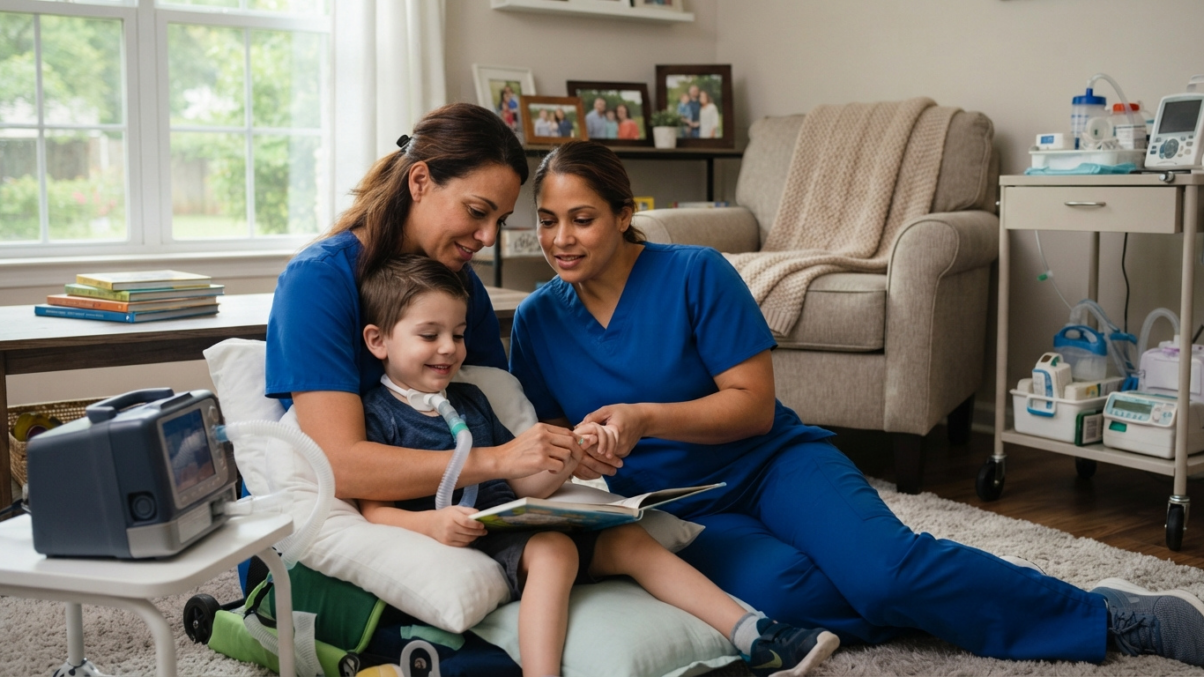
Pediatric home health care brings medical support into a child’s own home. Many families choose it for comfort and closeness. It can also help children heal in a familiar place.
This type of care is common for children with complex medical needs. These needs may include feeding tubes, breathing support, or long-term illness. As a result, families often need skilled help every day.
In this article, we look at how families truly feel about this care. We also share what research says. Finally, we explore ways to make pediatric home health care easier for everyone.
Every family’s story about pediatric home health care looks a little different. Some families use home care for a few weeks. Others rely on it for many years. Either way, families want safe care in a place that feels like home.
Here in Alabama, many families look for Alabama pediatric care that comes to their door. Children with serious medical needs often need nurses at home. Sunbridge HHC provides in-home pediatric private duty nursing across Alabama. This article shows what these families may feel and need.
Why Families Choose Care at Home
First, home gives children comfort and a sense of normal life. A Swedish study found that home care strengthened family life. Families saved time and energy, and they kept their usual routines.
In addition, pediatric home health care can lower the stress of hospital stays. Parents can sleep in their own beds. Siblings can also stay close to the sick child.
Moreover, the same study found that home care supported the health of the whole family. Family members felt more peaceful when the child received care at home. This gave them space to rest and recover emotionally.
Another reason is more freedom in daily life. Families can plan meals, rest, and play around the child’s needs. They do not have to travel back and forth to a hospital. This saves time and energy, as the Swedish researchers noted.
Pediatric home health care also suits children who need long-term support. Family advocates and providers have supported moving daily care to the home. Their goal is a nurturing place where a child can grow. They also want children to use their strengths as fully as possible.
Alabama pediatric care also includes strong hospital programs. For example, the Teal Program at Children’s of Alabama serves children with complex conditions. It helps coordinate care in and out of the hospital. Home nurses can then work alongside these care teams.
How Children Feel About Care at Home
Children often feel safer in their own rooms. They can play with their toys and see their pets. Because of this, medical visits feel less scary.
However, older children may feel different. Teens may worry about privacy when nurses visit often. They may also miss time with friends. A Swiss study of children aged eleven and older explored these feelings.
Therefore, kind and respectful nurses matter a lot. Nurses can talk directly to the child, not only to parents. Simple choices, like picking a bandage color, help build trust.
Siblings feel the change too. Brothers and sisters may feel proud to help, or they may feel left out. Parents can include them in simple tasks, like handing over supplies. This helps siblings feel seen and valued.
Play and routine also matter a great deal. Children often feel calmer when days feel steady and familiar. Nurses can plan visits around naps, meals, and school time. Even small changes like these can lift a child’s mood.
Challenges Families Face in Pediatric Home Health Care
Even so, home care is not always easy. Parents often carry heavy daily duties. Some feel tired, alone, or overwhelmed.
Families report several common problems:
- Nurse shortages: Researchers report that the shortage is worse in pediatric home nursing than in other nursing fields.
- Insurance gaps: In one interview study, parents had to patch together several insurance and payment programs.
- Rigid schedules: Family life becomes closely tied to nursing schedules, staffing, and services.
- Emotional strain: A review of home-based palliative care found fatigue and isolation, with mothers often carrying most of the load.
These problems can make families feel stretched thin. Missed nursing shifts can leave parents without rest. Parents may then cover the gaps themselves.
Still, these struggles are not a reason to avoid home care. They simply show where better support is needed. Families need steady help they can trust.
Money worries add more pressure. In the interview study, parents had to piece together many payment programs. Researchers warn that limited funding can lead to harmful and costly results. Families may then spend much time on paperwork.
Sleep is another big concern in pediatric home health care. When a nursing shift is missed, a parent may stay up to watch the child. Over time, this can wear down a parent’s health. Reliable nursing schedules therefore protect the whole family.
How Providers Can Build Trust With Families
Trust is the base of strong pediatric home health care. In the Swedish study, parents felt overwhelmed when trust was missing. Strong bonds between the family, the home care team, and the hospital helped families feel safe.
Next, nurses need training made for children. A U.S. study on home care quality found that families wanted more pediatric-specific training. They also wanted clearer sharing of care plans.
Finally, listening to families makes care better. Parents know their child best and see daily what works. Researchers say family expertise should guide training, policy, and advocacy.
Clear care plans also build confidence. Parents want to know who is coming and what they will do. Nurses can share written plans and update them often. In addition, one main contact person makes questions easier to ask.
Respect for the family’s culture and routines matters too. Every home has its own habits, rules, and beliefs. Good pediatric home health care teams ask first and then adapt. As a result, families feel like partners, not outsiders.
Conclusion: Supporting Children and Families at Home
Pediatric home health care can give children comfort and families stability. It also brings real challenges, like staff shortages and tiring routines. With the right support, many families do well at home.
To sum up, the best care listens to both children and parents. It offers skilled nurses, clear plans, and steady communication. These steps help the whole family feel safe.
Families who want to learn more can start with a simple step. They can talk with a care team about their child’s needs. They can also ask about nursing hours, training, and backup plans. Asking early can make the first weeks at home much smoother.
If your family needs Alabama pediatric care at home, Sunbridge HHC is ready to help. You can apply for private duty nursing or send a patient referral today. Use the buttons below to get started.