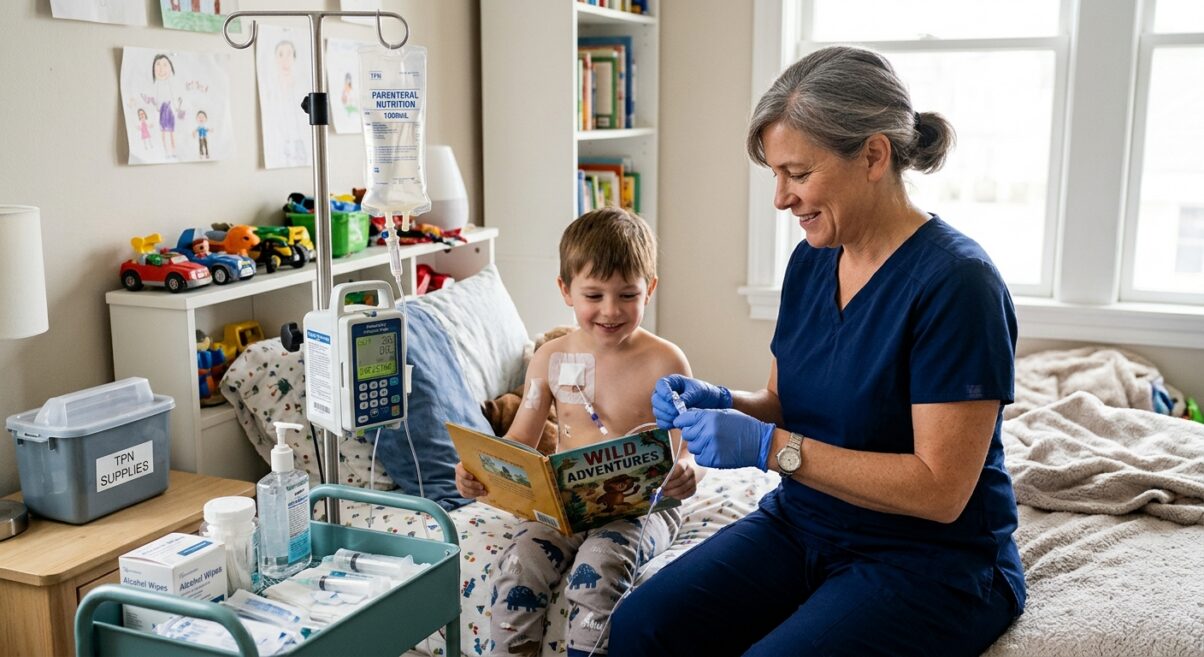
Caring for a TPN line can feel like a big job. This guide explains TPN line management in simple words. You will learn the daily steps and the warning signs. You will also learn where to find help.
Many families feel nervous at first. That is normal. With clear steps, the routine gets easier.
What Is TPN Line Management?
TPN stands for total parenteral nutrition. It is a liquid food that goes straight into a vein. It carries sugar, protein, fats, vitamins, and minerals. A pump moves it through a thin tube.
That tube is called a central line. TPN line management means caring for this line every day. It covers hand washing, dressing changes, and flushing. It also covers spotting problems early.
Why do people need TPN? Some people cannot digest or absorb enough food. Short bowel syndrome and bowel blockages are common causes. Your doctor will explain the reason in your case.
A care team guides each patient. It often includes a doctor, nurses, a dietitian, and a pharmacist. They set the plan and teach the routine. TPN line management is a shared job.
Why a Clean TPN Line Matters
The TPN line sits in a large vein. Germs can travel along it into the blood. Infection is the biggest risk, according to GIKids. Good TPN line management lowers that risk.
A bloodstream infection can become serious fast. Fever and chills are early warning signs. Redness or pus at the site is a warning too. Never wait if you see these signs.
Other risks include blood clots and a moved line. Poorly managed TPN can also harm the liver over time. Regular care and check-ups help prevent these problems. Your team will watch your health closely.
Clean surroundings help too. Cardiff’s nutrition team advises closing windows and turning off fans during line care. Keep pets out of the room as well. Skip dusty chores, like vacuuming, before you start.
Daily Steps for Safe TPN Line Management
Hand washing comes first, every single time. Wash with soap and water for at least 20 seconds. If you have no sink, use a gel with at least 60% alcohol. Let it dry fully before you touch the line.
Next, set up a clean, flat work space. Keep it away from the bathroom. Keep pets and children out of the area. Gather all supplies before you begin.
Here is a simple daily checklist for TPN line management. Use it along with your care team’s plan. Your own instructions always come first.
- Wash your hands before touching the line.
- Scrub the cap with an alcohol wipe and let it dry.
- Flush the line as your team taught you.
- Check the skin around the site for redness or swelling.
- Keep the dressing clean, dry, and secure.
- Keep emergency numbers where you can see them.
Check the site every day. Look for redness, swelling, drainage, or a bad smell. Also notice pain, burning, or stinging. Write down anything new and tell your team.
How to Flush and Protect Your TPN Line
Flushing keeps the line open in TPN line management. A TPN line can clog if it is not flushed. Saline is the usual flush, and some lines also need heparin. Your care team will tell you which one to use.
Many guides list 10 mL of saline per flush. Always use the amount your team gives you. Scrub the cap for 10 to 15 seconds first. Let it dry before you attach the syringe.
Stop if you feel any resistance. Never force the flush. Forcing a blocked line can break it. Call your care team for help right away.
Dressings protect the site from germs. Clear dressings are usually changed every 7 days. Gauze dressings are changed every 2 days. Change any dressing right away if it is wet, loose, or dirty.
Injection caps need changing too. Most are changed every 3 to 7 days. This often happens during a dressing change. Follow your nurse’s schedule.
Common Line Problems and Warning Signs
A blocked line is a common problem in TPN line management. You may feel resistance or be unable to flush. The pump may also sound an alarm. Do not force it, and call your team.
A cracked or leaking line needs quick action. Clamp the line between the break and your chest. Cover the broken area with clean gauze. Then call your care team without delay.
Call your provider for a fever of 100.4°F or higher. Chills, pain, or redness at the site are warning signs too. Gurgling sounds from the line also need a call. So does a line that falls out.
Other signs can point to blood sugar or fluid problems. These include thirst, shakiness, sweating, and headache. A weight change of over 2 pounds in a day is also a warning sign. Call your provider if you notice these.
Some signs are emergencies. Call 911 for chest pain or shortness of breath. Do not wait to see if it passes.
Living Well With a TPN Line
TPN line management does not have to stop daily life. Many people build a routine that fits their day. Stay calm and stay organized. Ask your team which activities are safe for you.
Water needs extra care. Keep the line out of water. Cover it with a waterproof dressing before a shower. Skip baths, hot tubs, and swimming.
TPN is not always forever. It can be short-term during an illness. Some people need it for a long time. Others need it for life.
Emotional support matters too. Talk with your care team if you feel stressed. Family and friends can learn the steps and help. Home nursing can also share the daily load.
FAQs
What is TPN line management?
TPN line management is the daily care of your central line. It includes hand washing, flushing, and dressing changes. It also means watching for signs of infection. Good care keeps the line safe and working.
How do I prevent infection in a TPN line?
Wash your hands before you touch the line. Scrub the cap and let it dry. Keep the dressing clean and dry. Cardiff’s team also advises closing windows and keeping pets outduring line care.
How often should I change the dressing?
Clear dressings are usually changed every 7 days. Gauze dressings are changed every 2 days. Change a dressing right away if it gets wet, loose, or dirty. UM Health shares these timelines in its guide.
How do I flush a TPN line?
Wash your hands and scrub the cap first. Attach the syringe and push the plunger slowly. Never flush against resistance. See the full steps in this TPN flushing guide.
What should I do if my TPN line is blocked?
Do not force the line or try to clear it yourself. This can cause the line to break. Call your care team right away. A specialist may be able to clear it safely.
What are the signs of a line infection?
Watch for fever, chills, and redness at the site. Swelling, pain, or pus are warning signs too. A sluggish or blocked line can also be a clue. Call your provider right away if you see these.
Can I shower with a TPN line?
Yes, but the line must stay dry. Cover it with a waterproof dressing first. Do not bathe, swim, or use a hot tub. Always check with your care team before you shower.
Who can help with TPN line care at home?
Your care team trains you in TPN line management before you start. This team often includes nurses, a dietitian, and a pharmacist. Home nursing can add support during the day or night. Ask your team about home nursing early.
Conclusion: Get Support for Your TPN Line Care
Good TPN line management protects your health every day. With training and steady habits, the routine feels easier. You are not alone on this path.
Remember these key points for TPN line management. Wash your hands, flush as taught, and keep the dressing dry. Watch for warning signs and call early. Small steps add up over time.
Home nursing can ease the load. A trained nurse can support your daily care routine. Sunbridge Home Health Care offers private duty nursing for families like yours.
Ready for the next step? The button below takes you to the application. It is a simple first step toward support.